
Sojourn to Iceland: The World Is Changing. See It While You Can.

Sojourn /ˈsōˌjərn/A temporary stay.
I stopped waiting for my life to become perfect before I started living it—and Iceland showed me that the world is not waiting either.

It’s no secret that younger generations have repurposed the ideology behind travel, money, and what it means to build a life.
I remember my grandparents telling me, “Work hard now. Travel in retirement.”
And to be fair, that is exactly what a lot of them did.
But for us? The future feels different. Ever-increasing housing prices. Microplastics in our food. The quiet, constant uncertainty of conflict, climate, and whether the world we are saving for will even look the same by the time we get there.
And through all of that, we are expected to… what? Only work?
No. Absolutely not.
That is not how the game is played anymore, and thank God I finally reformatted my rules.
In early March, I took a solo trip to Iceland. It was my first official step onto European soil, and because I am nothing if not a woman who can be emotionally impulsive with a search filter, I found a stellar deal online: flight, hotel, car.
One package. Done and done.

A quick Google search told me they drive on the same side of the road as we do in the U.S., which gave me a completely false sense of security. Thank God, I thought.
That comfort lasted approximately twelve minutes post-border check.
The day I landed, Iceland had been hit with snow the day before. I was handed the keys to a tiny front-wheel-drive Hyundai and sent off into the world like a baby deer with a too-long rental agreement. I pulled out of the snowy lot (not bad) and headed toward the Blue Lagoon.
As a solo traveler, going to the Blue Lagoon immediately after a flight that landed at seven in the morning was the right call. The check-in process was easy, everyone spoke English, and that blue water really is something to see in person. Because of the snowfall, the mountains were capped in white, creating this unreal contrast against the black volcanic rock.

I booked the package that included face masks, a welcome drink, and a little skincare goodie bag. Some people say the Blue Lagoon is overrated. I respectfully disagree. Maybe it is touristy, maybe it is expensive, maybe it is also exactly the kind of surreal, mineral-soaked baptism a jet-lagged woman needs after deciding she is no longer waiting for retirement to see the world.
What I do not see people mention enough is the café inside. After soaking until your fingers thoroughly prune, you can sit down for an actual meal with stunning views of the lagoon and surrounding landscape. Mine included a beer, of course—because apparently I enjoy adding plot complications to my own life—and some delicious sushi (a seafood fan’s paradise.)

Shortly thereafter was when Iceland’s weather made itself fully known.
Sideways ice-rain started pelting the windows. The wind picked up hard, cutting across the lagoon at over 16 miles per hour. Suddenly, that brunch beer started to feel less charming and more like a liability. People rushed indoors from the water with red, ice-pelted skin, and I stared out at the storm thinking:
Aha, so this is how Iceland introduces herself.
After contemplating my life’s decisions, I half-sprinted down the outdoor path toward the parking lot, dodging sideways ice and tourists alike. Even though I was covered head-to-toe, the tiny sliver of skin between my balaclava and coat had gone completely numb.
After fumbling with the keys, I lurched into my rental car and checked the weather.
Oh. Only a crisp 2℃ (aka the equivalent of an ice plunge in the Puget Sound in December.)
Heated steering wheel on? Check.
Directions to my hotel in a city I could not pronounce? Check.
Confidence? Debatable.
Now, about that whole “driving on the same side” thing.
Sure, Iceland has some of the flattest roads I have ever seen, especially compared to the winding, tree-choked chaos of the Pacific Northwest. But apparently, that means absolutely nothing when you are battling wind strong enough to make your little rental car question its own will to live. Add in major jet lag, ice-rain, unfamiliar roundabouts (why are there so many effing roundabouts?), and native drivers who seemed personally offended that I dared to drive the speed limit in such conditions, and you have…
Well, Iceland.
Dramatics and near-death experiences aside, I cannot hyperbolize enough how much I believe everyone should visit this stunning country at least once in their life.
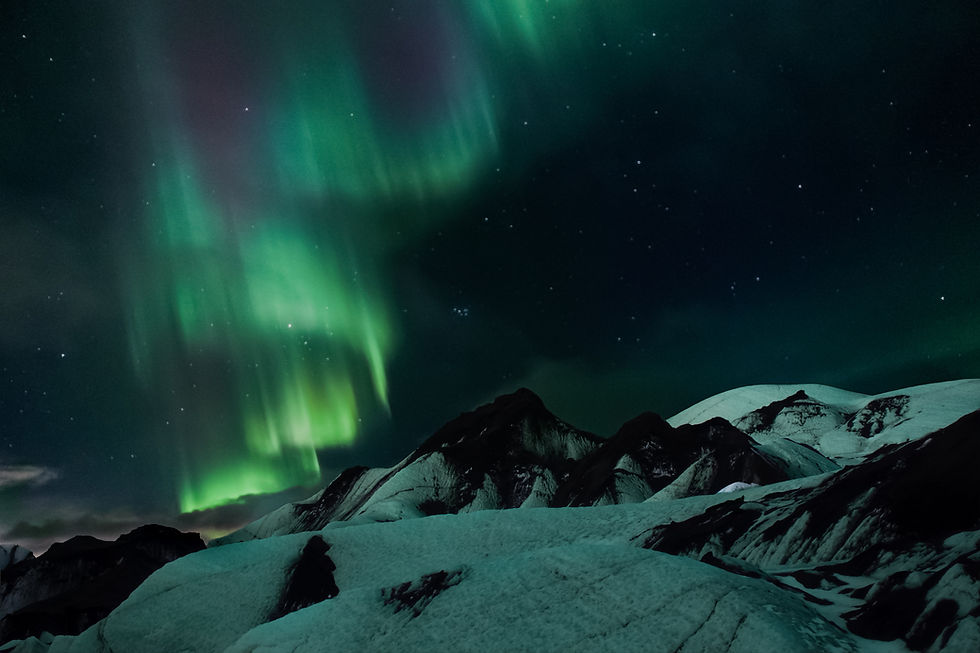
Now, I am obviously biased because I consider myself a top-notch planner, but visiting Iceland in March was absolutely the move.
The country’s landscape is almost absurdly diverse, especially as you move from west to east. In the same day, you can drive past snow-covered roads, white-capped mountains, black volcanic rock, steaming geothermal fields, and lush green valleys that look like they belong in an entirely different season.
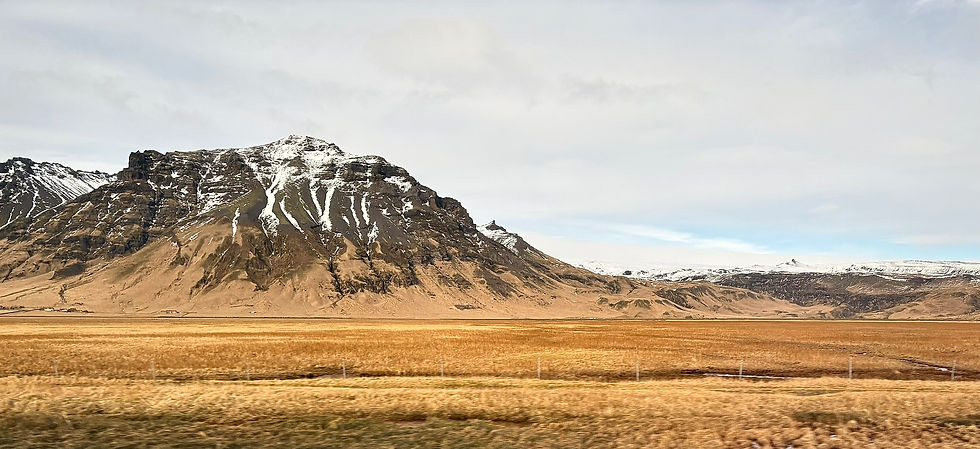
March gives you a little bit of everything: the last grip of winter, the first hints of spring, fewer crowds than peak summer, and enough dramatic weather to keep your ego in check.
Which, frankly, Iceland seems to enjoy doing.
And yet, somewhere between white-knuckling the steering wheel, mispronouncing every town name with the confidence of a woman who had simply accepted linguistic defeat, and pulling over every twenty minutes because the landscape kept demanding photographic evidence, I realized something important: I did not feel afraid to be there alone.
Humbled? Absolutely.Jet-lagged? Deeply.Questioning whether my tiny rental car had a personal vendetta against crosswinds? Constantly.
But unsafe? No.

There is a specific kind of awareness that comes with traveling alone as a woman. You do not fully turn it off. You notice where the exits are. You clock who is around you. You pay attention to whether a parking lot is empty, whether a road has service, whether the person being “friendly” is friendly or friendly. It is not paranoia so much as the lifelong operating system women are handed without ever asking for the download.

So when I say Iceland felt safe, I do not mean I became careless. I still checked the weather like it was a toxic ex’s Instagram story. I still mapped my routes before leaving. I still said “no” when a stranger on the side of the road offered me a ride to Þingvellir. I still avoided driving too late at night because foreign roads, winter weather, and a circadian rhythm actively filing a complaint are not exactly a holy trinity of good decision-making.
But there was a quiet ease to being there alone that I did not expect.
I ate by myself without feeling watched. I wandered through gas stations and cafés and hotel lobbies without that prickly little feeling of being out of place. I stood on black sand beaches, walked through misty waterfalls, soaked in geothermal water, and drove past mountains that looked like they had been carved by gods with excellent taste. No one bothered me. No one made me feel strange for being alone. No one asked where my boyfriend was, which, frankly, was great because the answer would have ruined the vibe.
And maybe that is part of why the trip mattered so much.
Because traveling alone is not just about proving you can carry your own suitcase or navigate an airport without emotionally merging with the nearest competent-looking stranger. It is about realizing how much of your life you are allowed to experience without waiting for someone else to accompany you.
For so long, travel had been filed away in my brain as something that belonged to a future version of myself. A version with more money, more stability, more certainty. Maybe even a partner. And definitely a body I felt better in.
All in all, a life that looked cleaner and more impressive from the outside.
But Iceland didn’t ask or require me to arrive as the perfect version of myself.

It let me arrive tired, recently remade, nervous, overpacked, and underprepared in ways I did not yet understand. It let me arrive as a woman trying to remember that her life was still hers.
Somewhere on those long, open roads, I started to understand that waiting can disguise itself as responsibility. Sometimes we call it “being practical” when what we really mean is, “I do not feel ready to let myself have this yet.”
But readiness is a moving target. Perfect timing is a scam. And the world, unfortunately and beautifully, is not pausing while we negotiate with our own fear.
I went because the world is changing, and some places are not waiting around for us to finally have the perfect budget, perfect partner, perfect body, perfect life, or perfect timing.
I did not understand how literal that lesson would become until I stood on a glacier.
During my glacier hike on Sólheimajökull, our guide explained that the glacier had been retreating for decades. Later, I learned it has lost roughly 1.5 kilometers in length in the last 25 years, and that the lake beside it did not even exist before 2009. I remember standing there in crampons, looking at this ancient, blue-veined mass of ice, trying to reconcile its size with its fragility.

Because that is the thing about disappearing places: they do not always look like they are disappearing.
Sometimes they look massive. Permanent. Too old and too powerful to be vulnerable.
And then someone tells you the version you are standing on is already smaller than the version someone else stood on twenty-five years ago.

Reynisfjara carried that same lesson in a different form. Just weeks before I arrived, coastal erosion had dramatically changed access to the black sand beach. The place was still there, yes, but not in the same way. Visitors could see the basalt columns and surf from the upper ridge, but could no longer walk down to the columns themselves.
A place I had seen in photos for years—a bucket list item to stand on those columns—had changed before I ever reached it.
That is what I mean when I say: see the world while you can.
Not recklessly. Not irresponsibly. Not by draining your quarter-life savings for a plane ticket because the internet told you self-discovery requires a carry-on bag and questionable financial choices.
But sooner than “someday.”
Sooner than retirement.
Sooner than waiting for the perfect relationship, the perfect body, the perfect salary, the perfect timing, or the perfect version of yourself who finally deserves to go.
Because the world is changing whether we make plans or not.
And sometimes, the place you are waiting to see is not waiting for you.


Comments